


As we move into 2025, small businesses are faced with unprecedented levels of competition, rapid technological change, and increasing customer expectations. To thrive in this environment, they need tools that offer efficiency, transparency, and automation. Enterprise Resource Planning (ERP) systems deliver all of that—and more—by unifying various business processes into one centralized platform.
ERP systems, once considered a tool only for large enterprises, have become more accessible and affordable for small businesses thanks to advancements in cloud technology, AI, and modular design. Whether you’re in retail, manufacturing, or services, ERP helps reduce manual tasks, streamline operations, and drive smarter decision-making.
What Is ERP and Why It Matters in 2025
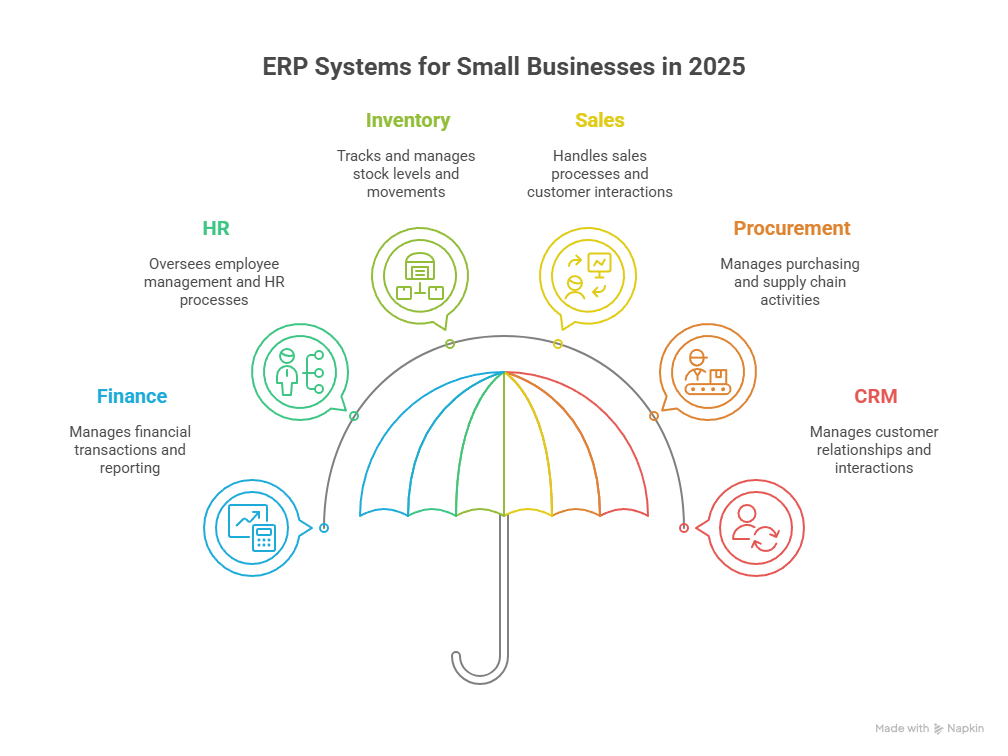
ERP stands for Enterprise Resource Planning. It refers to software systems that consolidate and manage core business functions such as finance, HR, inventory, sales, procurement, CRM, and more—under one digital roof.
Small businesses in 2025 can’t afford disjointed systems. Manual processes, spreadsheets, and standalone software create silos, increase errors, and slow decision-making. ERP offers a solution by centralizing operations and providing real-time data visibility across all departments.
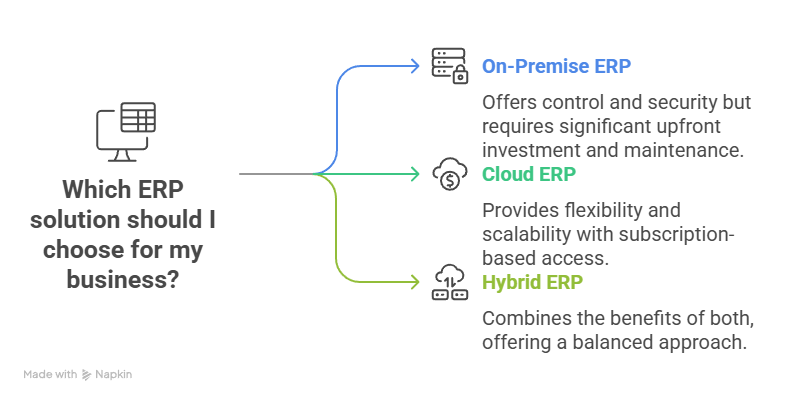
The modern ERP landscape includes three main types:
- On-Premise ERP – hosted on the company’s internal servers.
- Cloud ERP – hosted online and accessed via subscription.
- Hybrid ERP – a blend of both, offering flexible deployment
Why Small Businesses Must Adopt ERP
ERP isn’t just about technology—it’s about survival. In 2025, customers expect instant responses, customized services, and seamless transactions. Businesses must operate with agility, efficiency, and precision.
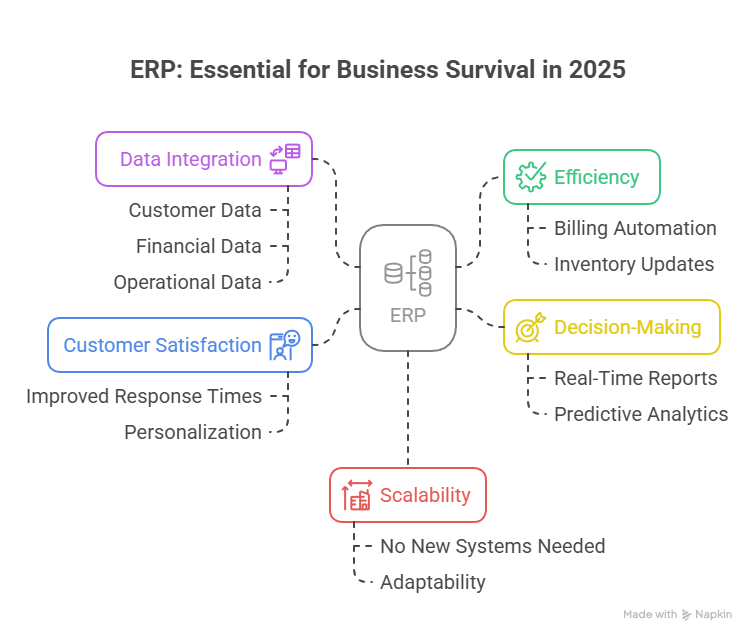
Here’s why ERP is essential:
- Efficiency: Automates repetitive tasks like billing and inventory updates.
- Data integration: Provides a unified view of customers, finances, and operations.
- Decision-making: Offers real-time reports and predictive analytics.
- Customer satisfaction: Improves response times and personalization.
- Scalability: Grows with the business without the need for new systems.
Without ERP, small businesses risk falling behind competitors who can act faster, serve better, and scale smarter.
Key Features to Look for in an ERP System
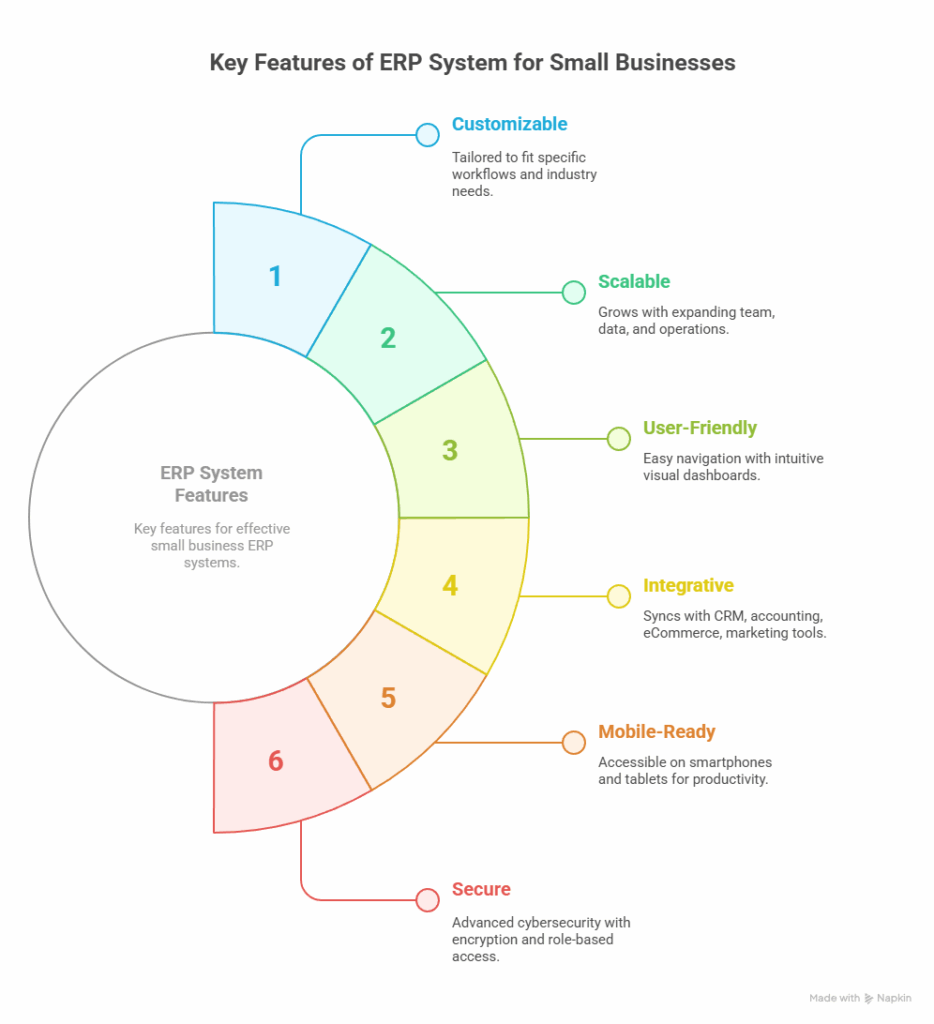
The best ERP systems for small businesses are:
- Customizable: Can be tailored to match your workflows and industry.
- Scalable: Grow as your team, data, and operations expand.
- User-Friendly: Easy to navigate, visually intuitive dashboards.
- Integrative: Sync with existing tools like CRM, accounting software, eCommerce platforms, and marketing tools.
- Mobile-Ready: Access via smartphones and tablets for on-the-go productivity.
- Secure: Advanced cybersecurity protocols like encryption, role-based access, and regular updates.
Look for systems that provide training, documentation, and strong customer support to help your team adopt the platform quickly and confidently.
Top ERP Systems for Small Businesses in 2025
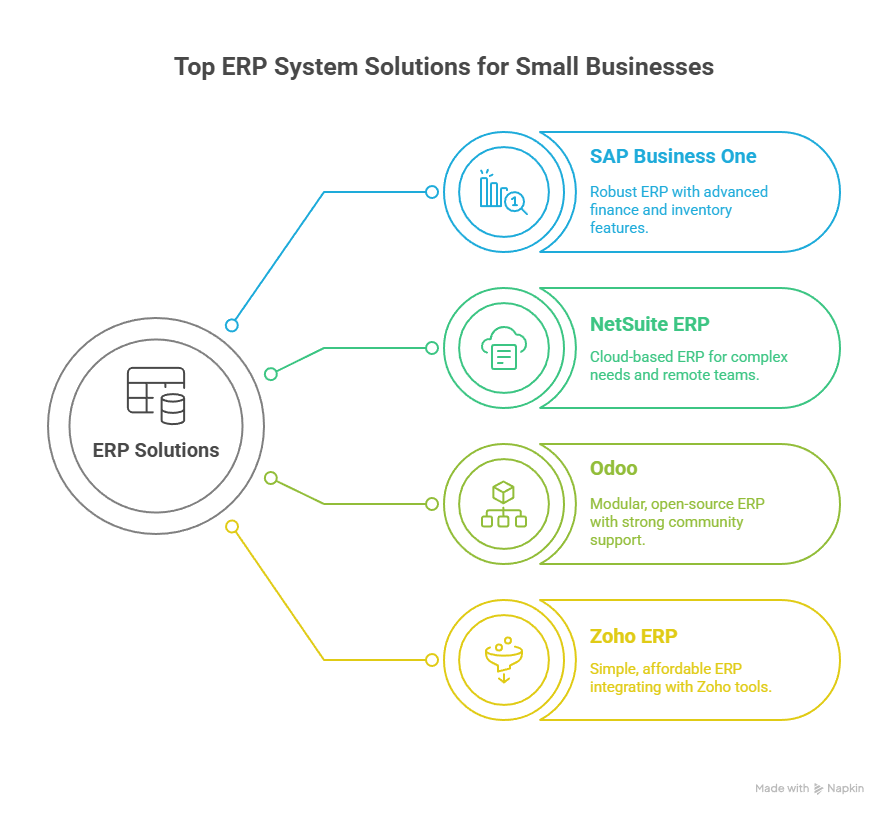
- SAP Business One – Ideal for growing small businesses needing robust features like advanced finance, inventory, and industry-specific modules. Offers both cloud and on-premise versions.
- NetSuite ERP – A comprehensive, cloud-based solution from Oracle. Best for small businesses with complex needs and remote teams. Great for automating workflows and managing global operations.
- Odoo – A modular, open-source ERP with a strong community. Affordable and highly customizable. Excellent for startups and businesses with tech support.
- Zoho ERP – Simple, affordable, and easy to implement. Integrates well with Zoho’s suite of business tools. Perfect for service-based or digital companies.
Each of these solutions serves different needs. Your ideal ERP depends on your industry, team size, budget, and goals.
Choosing the Right ERP for Your Business
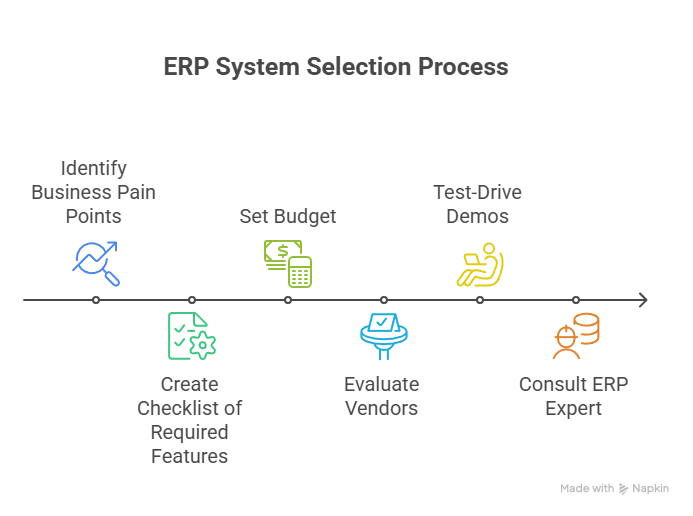
Start by identifying your business pain points. Are you losing track of inventory? Do your sales and finance teams operate in silos? Are reports time-consuming to generate?
Once you know your needs:
- Create a checklist of required features.
- Set a budget that includes implementation, training, and support.
- Evaluate vendors based on support, reputation, and customization options.
- Test-drive demos and involve your team in the selection process.
If you're unsure, consult an ERP expert who can match your requirements with the right solution.
Implementation Challenges and How to Overcome Them
Rolling out an ERP system isn’t without hurdles. The most common challenges include:
- Employee Resistance – Change is hard. Engage your team early, explain the benefits, and train them well.
- Data Migration – Ensure your data is clean and structured before import. Use trial runs and always back up data.
- Timeline Delays – Avoid the “big bang” launch. Instead, opt for a phased rollout with milestones.
- Cost Overruns – Plan for hidden expenses like training, customizations, and third-party integrations.
With proper planning, communication, and training, these challenges can be mitigated, ensuring a smooth transition and early ROI.
Cost of ERP and Budgeting for It
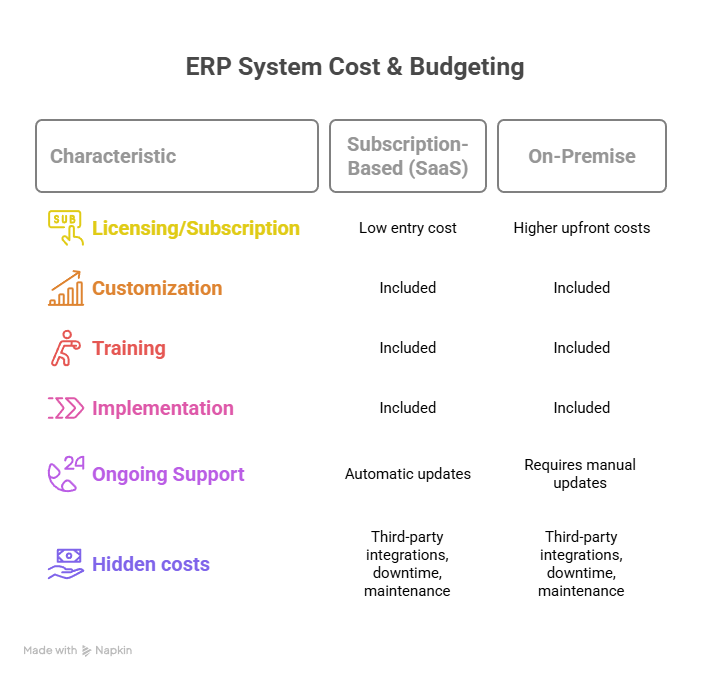
ERP systems range from free to thousands per month. Costs typically include:
- Licensing or subscriptions
- Customization
- Training
- Implementation
- Ongoing support
Subscription-based models (SaaS) are popular in 2025 for their low entry cost and automatic updates. On-premise solutions may have higher upfront costs but could save money over time.
Hidden costs can include third-party integrations, downtime during setup, and maintenance. Always ask for a full pricing breakdown.
ERP Trends in 2025
The ERP landscape is evolving rapidly. Key trends shaping the future include:
- AI and Machine Learning – ERP systems now predict inventory needs, suggest pricing, and detect fraud using AI algorithms.
- Mobile ERP – Business leaders and teams expect to manage operations from anywhere. Mobile apps are no longer optional.
- Cybersecurity – With increasing data threats, ERP vendors now offer advanced encryption, compliance tools, and AI-based threat detection.
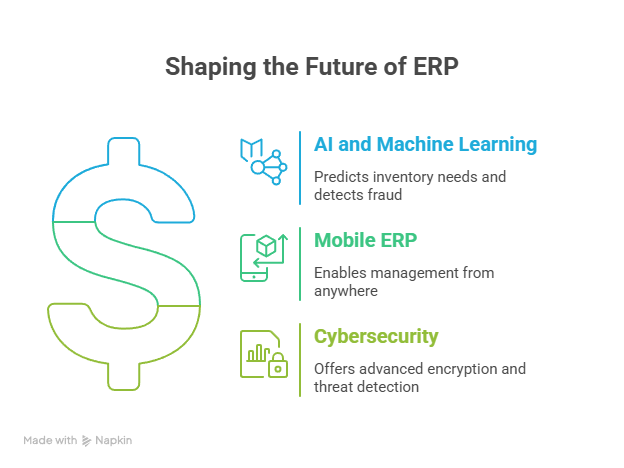
Staying ahead of these trends ensures your ERP remains an asset—not a liability—as your business evolves.
Case Studies: Real Success Stories
Small businesses across industries have used ERP to great effect:
- A boutique retailer used Zoho ERP to reduce inventory errors by 60% and boost repeat sales.
- A manufacturing startup adopted Odoo and improved delivery speed by 40%.
- A freelance marketing agency unified global operation with NetSuite, cutting billing errors and admin hours.
The lesson? Start with core needs, grow into the system, and focus on ROI—not just features.
DIY vs Consultant: Who Should Implement ERP?
You can implement ERP on your own if:
- Your business is small and has simple needs.
- You choose a user-friendly, cloud-based platform like Zoho or Odoo.
- You have internal technical resources.
Hire a consultant if:
- You require custom features or third-party integrations.
- Your processes are complex (e.g., manufacturing or logistics).
- You don’t have time or expertise in-house.
Consultants add cost but save time and prevent missteps during setup and training.
Training Your Team for ERP Success
Training is the difference between success and failure in ERP adoption. Invest in:
- Hands-on sessions
- Documentation and guides
- Video tutorials
- “ERP champions” within departments
Encourage a culture of continuous learning. Offer incentives for training completion and recognize employees who actively use the system to improve performance.
Measuring ERP Success
Track KPIs like:
- Inventory accuracy
- Invoice turnaround time
- Employee productivity
- Order fulfillment speed
- Customer satisfaction
Use built-in analytics dashboards or external BI tools to review and optimize performance regularly. ERP is not “set it and forget it.” It's a living system that evolves with your business.
Final Thoughts
ERP solutions are transforming how small businesses operate. What once took days now takes minutes. What was once fragmented can now be unified. In 2025, an ERP system isn’t just an investment in software—it’s an investment in your business’s growth, agility, and future.
Choose a system that aligns with your goals. Train your team. Plan your implementation carefully. And don’t be afraid to adapt as you grow.