


Mobile app development has become a cornerstone of the digital economy, transforming how businesses engage with customers and how users interact with technology. This blog delves into the intricacies of mobile app development, exploring its significance, the development process, key technologies, and future trends. Whether you're a budding developer, a business owner, or simply curious about the field, this guide aims to provide valuable insights into the world of mobile app development.
The Importance of Mobile App Development
In today's fast-paced digital landscape, mobile applications have become essential tools for businesses and consumers alike. With over 3.5 billion smartphone users globally, mobile apps provide a direct channel for companies to reach their audience. Here are some reasons why mobile app development is crucial:
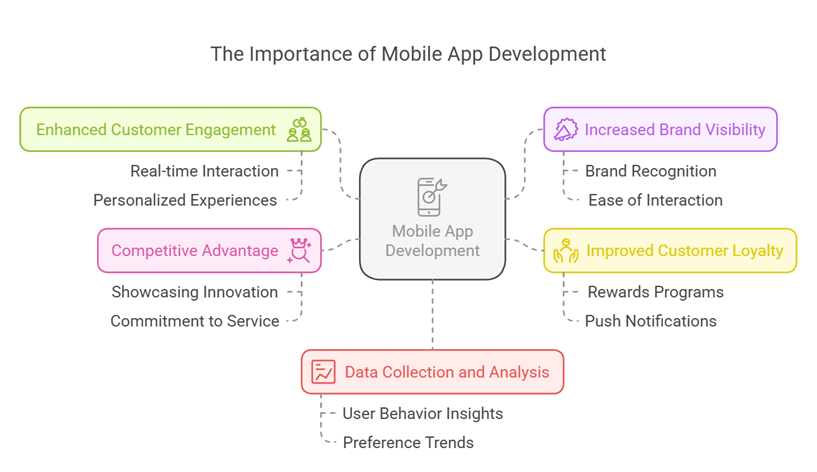
- Enhanced Customer Engagement: Mobile apps allow businesses to engage with their customers in real-time, offering personalized experiences and instant access to services.
- Increased Brand Visibility: A well-designed mobile app can significantly enhance brand visibility and recognition, making it easier for customers to remember and interact with a brand.
- Improved Customer Loyalty: Mobile apps can foster customer loyalty through features like rewards programs, push notifications, and personalized content, encouraging users to return.
- Competitive Advantage: In a crowded marketplace, having a mobile app can set a business apart from its competitors, showcasing innovation and commitment to customer service.
- Data Collection and Analysis: Mobile apps provide businesses with valuable data on user behavior, preferences, and trends, enabling them to make informed decisions and improve their offerings.
The Mobile App Development Process
Developing a mobile app involves several stages, each critical to ensuring the final product meets user needs and business objectives. Here’s a breakdown of the typical mobile app development process:
1. Idea and Research
The first step in mobile app development is to generate an idea and conduct thorough market research. This involves identifying the target audience, analyzing competitors, and understanding market trends. A well-defined idea will guide the entire development process.
2. Planning
Once the idea is solidified, the next step is to create a detailed plan. This includes defining the app's features, functionalities, and user interface (UI) design. Additionally, developers should choose the platform (iOS, Android, or both) and decide on the technology stack.
3. Design
The design phase focuses on creating an intuitive and visually appealing user interface. This involves wireframing the app's layout, designing the UI elements, and ensuring a seamless user experience (UX). The design should align with the brand's identity and cater to the target audience's preferences.

4. Development
During the development phase, the actual coding takes place. Developers use programming languages and frameworks suitable for the chosen platform. For iOS, Swift or Objective-C is commonly used, while Android apps are typically built using Java or Kotlin. This phase also involves backend development, where server-side logic and database management are established.
5. Testing
Testing is a critical step in the development process. It involves identifying and fixing bugs, ensuring the app functions correctly across different devices and operating systems. Various testing methods, including functional testing, usability testing, and performance testing, should be employed to guarantee a high-quality product.
6. Deployment
Once testing is complete and the app is polished, it’s time for deployment. This involves submitting the app to app stores (Google Play Store for Android and Apple App Store for iOS) and ensuring it meets all guidelines and requirements. Proper marketing strategies should also be implemented to promote the app upon launch.
7. Maintenance and Updates
The development process doesn’t end with deployment. Continuous maintenance and updates are essential to keep the app relevant and functional. This includes fixing bugs, adding new features, and adapting to changes in technology and user preferences.
Key Technologies in Mobile App Development
Mobile app development relies on various technologies and tools that enhance functionality and user experience. Here are some key technologies used in the field:
1. Native Development
Native app development involves creating apps specifically for one platform (iOS or Android) using platform-specific languages and tools. This approach offers high performance and a seamless user experience but requires separate codebases for each platform.
2. Cross-Platform Development
Cross-platform development allows developers to create apps that run on multiple platforms using a single codebase. Frameworks like React Native, Flutter, and Xamarin enable this approach, making it cost-effective and efficient.
3. Backend Technologies
Backend development is crucial for managing data and server-side logic. Technologies like Node.js, Ruby on Rails, and Django are commonly used to build robust backends that support mobile applications.
4. Cloud Services
Cloud services provide scalable storage and computing power for mobile apps. Platforms like AWS, Google Cloud, and Microsoft Azure offer various services that enhance app performance and reliability.
5. APIs
Application Programming Interfaces (APIs) are essential for enabling communication between the mobile app and external services. APIs allow developers to integrate third-party functionalities, such as payment gateways, social media sharing, and location services.
Future Trends in Mobile App Development
As technology continues to evolve, so does mobile app development. Here are some emerging trends that are shaping the future of the industry:
1. Artificial Intelligence (AI) and Machine Learning (ML)
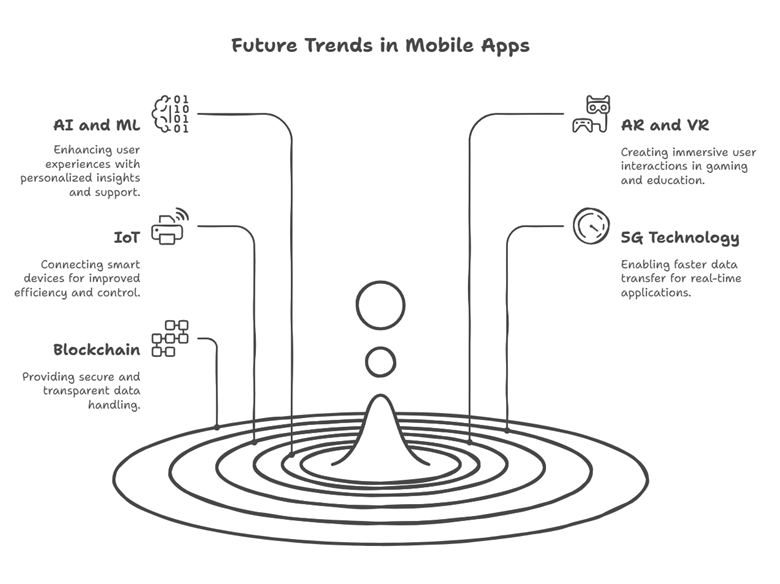
AI and ML are increasingly being integrated into mobile apps to enhance user experiences. These technologies can provide personalized recommendations, improve customer support through chatbots, and analyze user behavior for better insights.
2. Augmented Reality (AR) and Virtual Reality (VR)
AR and VR technologies are gaining traction in mobile app development, particularly in gaming, retail, and education. These immersive experiences can engage users in new ways, offering unique interactions with products and services.
3. Internet of Things (IoT)
The IoT is revolutionizing how mobile apps interact with devices. As more smart devices become connected, mobile apps will play a crucial role in controlling and managing these devices, leading to increased convenience and efficiency.
4. 5G Technology
The rollout of 5G technology is set to transform mobile app development by enabling faster data transfer and improved connectivity. This will enhance the performance of apps, particularly those that rely on real-time data, such as streaming services and online gaming.
5. Blockchain Technology
Blockchain technology is making its way into mobile app development, particularly in sectors like finance and healthcare. It offers enhanced security, transparency, and trust, making it an attractive option for apps that handle sensitive data.
Conclusion
Mobile app development is a dynamic and rapidly evolving field that plays a vital role in today's digital landscape. Understanding the development process, key technologies, and future trends is essential for anyone looking to succeed in this industry. As businesses continue to recognize the importance of mobile apps in engaging customers and driving growth, the demand for skilled developers will only increase. Whether you're a developer or a business owner, staying informed about the latest trends and best practices in mobile app development will be crucial for success in this competitive market.